Table Of Content
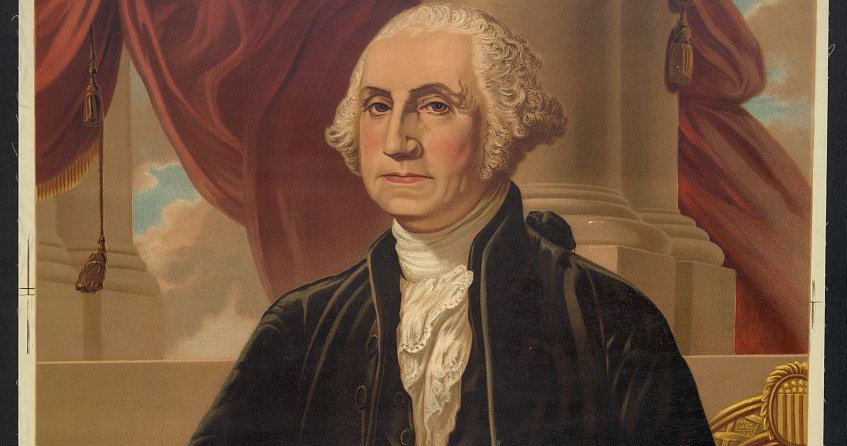
Another misconception about Washington’s hair is that he wore a white wig, which was a common style choice at the time. But Washington was blessed with a full head of hair as he aged, which he powdered to look like the popular wigs of the time (his natural hair color eventually faded from reddish-brown to gray). The white color was favored by military men, and Washington often kept his hair at shoulder length and would tie it behind his head in a ponytail or with a ribbon. He would then fluff out the sides to give the appearance of a wig, and grease the hair with pomade to add firmness to his fluffy curls. Lastly, Washington sprinkled a fine white powder over his scalp for color, and often bunched his ponytail into a silk bag to prevent the powder from dusting onto his back and shoulders.
The Collections
Opinion Darryl George lawsuit shows Texas still discriminates on Black hair - The Washington Post - The Washington Post
Opinion Darryl George lawsuit shows Texas still discriminates on Black hair - The Washington Post.
Posted: Mon, 04 Mar 2024 08:00:00 GMT [source]
"Usually hair was given out to close family and friends. But because of Washington's fame, a lot of people wanted it. When he died, they cut off his hair to give to people." His father, Gen. Philip Schuyler is a school founder and one of Washington's close friends, having served under him in the Revolutionary War. "Riffing on George Washington’s hair, Beutler follows nineteenth century antiquarians, free Blacks, educators, and evangelicals as they tried to hold on to the founding era while making sense of their own. This lively book wears its erudition lightly."
James George Obituary (2024) - Washington, PA - Observer-Reporter - Legacy.com
James George Obituary ( - Washington, PA - Observer-Reporter.
Posted: Wed, 24 Apr 2024 03:27:17 GMT [source]
Massachusetts Historical Society
The college has thousands of old books in its archives, so this was fairly routine business. The important part is that this old leather almanac that somehow ended up on a backroom shelf at Union College once belonged to a family that was friendly with the Washingtons. Union College was founded outside Albany, N.Y., in 1795, just a few years before Washington died. In December, an archivist was doing some library inventory work and noticed an old leather-bound book that for some reason had never been catalogued. And that's the end of the story of President George Washington's life, but not of his hair. Think carefully, and remember this story – of George Washington's old hair and the lucky people who found it.
Strands of George Washington’s hair found in book

Sifting through old books is part of the librarian’s job, so uncovering relics of history is not unusual. Mr. Myers previously found letters that offered details of the college’s founding more than two centuries ago. But his most recent find qualifies as an unrivaled experience.
George Washington's Hair: How Early Americans Remembered the Founders
College officials believe that a member of the Schuyler family probably donated the book at some point, given their close connections to the college. That’s one of the reasons why the college has funded a survey of the library’s archival collections — to uncover “hidden treasures” that may be collecting dust, she said. By the time he became president in 1789, Washington’s locks had faded to a grayish white. Washington’s iconic hairdo is plastered on every $1 bill and quarter — but contrary to popular belief, he never wore a wig. A shabby, leather-bound almanac from 1793 sat long forgotten on a shelf at Union College’s library in upstate Schenectady — until an archivist surveying some of the school’s collections plucked it from obscurity in December.
Supposedly he lost his teeth by cracking Brazil nuts between his jaws. One set of dentures was carved from hippopotamus tusk and had a space to accommodate the single tooth. This caused almost constant pain, which he tried to ease with laudanum. In the British Army a tough hair yank was a rite of passage for young officers; it was common to yank really hard. She also helps make history fun and accessible with her podcast The Digital Dust Podcast, which covers topics on everything from art history to grad school. During his presidency, he witnessed the rise of the Democratic-Republican party in opposition to the Federalists and worried that future political squabbles would undermine the concept of popular sovereignty in the United States.
How Washington styled his hair
Stuart explained, “When I painted him, he had just had a set of false teeth inserted, which accounts for the constrained expression so noticeable about the mouth and lower part of the face. I wanted him as he looked at that time.” Stuart preferred the Athenaeum pose and, except for the gaze, used the same pose for the Lansdowne painting. By the time he was 24, Washington began suffering from horrible dental problems. At 57, he was wearing a full set of dentures made from artificial lead frames.
With charming illustrations, artist Wendy MacNaughton brings to life Washington’s routine — the gathering, enthusiastic yank back to try and broaden the forehead, fluffing of the hair on the side and the powdering. Another misconception is that Washington always had white hair or wore wigs. He actually never wore wigs, preferring his natural hair styled in the fashion of the time, and sometimes powdered to appear white. In portraits of a younger Washington, his hair is naturally a reddish brown.
There’s a painting of him as a young man, with Martha and her two children, that shows his hair as reddish brown, which Chernow says was his true color. In the original story, when Washington was six years old he received a hatchet as a gift and damaged his father’s cherry tree. When his father discovered what he had done, he became angry and confronted him. Young George bravely said, “I cannot tell a lie…I did cut it with my hatchet.” Washington’s father embraced him and rejoiced that his son’s honesty was worth more than a thousand trees. "What was customary, often times, was that people would gift a lock of hair," said Spartz of the finding. Not unlike with a certain later president, people assume Washington wore a wig, but he didn't.
Think of this as the 18th-century equivalent of a marine buzz cut. In Washington’s time, the toughest soldiers in Europe, officers in the Prussian Army, fixed their hair this way. To achieve his iconic ‘do, Washington’s shoulder-length hair would be pulled tightly around the head and secured in a braid or ponytail in the back. The sides of the hair could be curled or teased outward, placing maximum importance on the forehead – a very trendy look at the time.
While we have many portraits of Washington, surprisingly, very few were created from life. Washington apparently hated sitting for portraits, thinking they were a waste of his time. For this reason, many images we see of him today are copies, and many of them look quite different from each other. In December, an archivist at Union College in Schenectady, New York, was sorting through some of the college’s oldest books and records when he spotted an 18th-century, leather-bound almanac that had never before been catalogued. The book was titled Gaines Universal Register or American and British Kalendar for the year 1793, and its pages were filled with population estimates for the American colonies and comparisons of various coins.
He tied his hair in a queue, which was sometimes worn in a small black silk bag. Washington kept his hair styled in a low ponytail, (then called a queue), accented by teased sides, a wide forehead, and a black silk ribbon tying it all together. While the majority of men who wore this style used wigs, Washington’s was au naturel – minus that greyish-white color. Older paintings of Washington actually show his natural hair color was a reddish-brown, which means his snow-white locks were likely achieved with wig powder. Usually, history remembers 18th-century hairstyles as the white, curly, ornate look made famous by King Louis XVI, Mozart, and even Washington’s successors John Adams and Thomas Jefferson. However, at the time that Washington was sporting the powdered wig look it was already coming out of style and was seen as a more practical and traditional style.
The painting, The Courtship of Washington by John C. McRae, was painted in 1860, long after Washington’s death in 1799. But a project out of the University of Virginia called The Papers of George Washington also confirms that the first president’s natural hair color was light brown. The style he favored wasn’t fancy, though it may appear so to modern eyes. It was a military style called a queue, "the 18th-century equivalent of a marine buzz cut," Krulwich writes.


No comments:
Post a Comment